If you're wondering how to use Solawave wand on nasolabial folds and smile lines daily, the answer is short: glide the warmed wand upward from the corner of your mouth toward your cheekbone in slow, 30-second passes per side, three minutes total, on cleansed and serum-damp skin every morning. The wand's 630nm red light, microcurrent, and therapeutic warmth work together to soften creases when used consistently for 8-12 weeks. Many users also layer in a full-face LED mask 3-5 nights weekly to accelerate collagen response. Below is the full 2026 protocol, glide patterns, mask pairings, and FAQ.
Why nasolabial folds respond to a Solawave-style routine
Nasolabial folds and smile lines deepen because of three converging factors: collagen loss in the mid-face, weakening of the zygomaticus and levator labii muscles, and repetitive expression creasing. The Solawave wand targets two of the three at once. The 630nm red light penetrates roughly 3-5mm into the dermis to stimulate fibroblast activity, the microcurrent (subsensory electrical current at roughly 80-300 microamps) re-educates the underlying muscles, and the therapeutic heat (around 107-109°F) increases local blood flow so topical serums absorb faster. None of this is a one-and-done treatment. The reason the daily ritual matters is that fibroblast stimulation peaks 24-48 hours post-exposure and then decays. Skip three days and you've reset the clock on collagen signaling.
That's why the real question isn't whether the wand works — it's whether you'll actually do it every morning for three months. Build it into your existing routine and the results compound.
The exact daily protocol for nasolabial folds and smile lines
Here is the step-by-step 2026 protocol. Total time: under five minutes.
Step 1 — Cleanse. Wash with a gentle, non-stripping cleanser. The wand's microcurrent will not conduct through makeup, SPF residue, or oily film. Pat dry until skin is just barely damp.
Step 2 — Apply a conductive serum. Solawave's renewal serum is formulated for conductivity, but any water-based hyaluronic acid or peptide serum works. Avoid silicones, oils, and thick creams as they create a barrier the current cannot cross. A pea-sized amount across both nasolabial zones is enough.
Step 3 — Warm the wand. Power on and wait until the metal contact plates feel warm against the back of your hand. Cold contact equals weaker results.
Step 4 — Glide the right side, 90 seconds. Place the wand at the outer corner of your right nostril, where the nasolabial fold originates. Glide it slowly outward and upward toward the top of your cheekbone, following the line of the fold. Each pass should take roughly five seconds. Repeat 18 passes on this side. Always glide upward — never down. Downward strokes train the muscles in the wrong direction.
Step 5 — Treat the smile line, 30 seconds. From the corner of your mouth, glide the wand upward at a 45° angle toward your ear. This addresses the marionette/smile line that often pairs with the nasolabial fold. Six passes.
Step 6 — Mirror on the left, two minutes. Repeat steps 4 and 5 on the left side. Total wand time: roughly four minutes.
Step 7 — Seal. Follow with moisturizer and SPF 30+. Red light therapy is not photosensitizing, but unprotected mid-face skin invites the very pigment-and-laxity issues you're trying to undo.
Do this every morning. If you only have time for one side per day, alternate — but don't skip more than 48 hours.
Why pair the wand with a full-face LED mask
The wand delivers a concentrated, targeted dose to the nasolabial corridor, but a full-face LED mask hits the broader cheek and jaw zones the wand can't cover in five minutes. The two devices are complementary, not redundant: think of the wand as your daily spot treatment and the mask as your 2-3x weekly deep session. A mask delivers ten minutes of broad-spectrum red and near-infrared coverage that drives generalized collagen synthesis around the whole midface — which means the wand has stronger underlying tissue to work with. For more on stacking modalities, see our guide on microcurrent vs LED therapy for aging.
Comparison of LED masks that pair well with the Solawave wand
| Mask | Wavelengths | Neck coverage | Fit type | Best for |
|---|---|---|---|---|
| Solawave LED Face Mask | Red / Deep Red / NIR / Amber | No | Rigid contoured | Same-ecosystem pairing |
| ONLUKY Mask + Neck | Red / NIR | Yes | Rigid two-piece | Jowl + neck laxity |
| Flexible Silicone 7-Mode | 7 wavelengths | No | Soft silicone | Conforming to smile lines |
| NEWKEY 4D 630nm | 630nm red | No | 4D contoured | Nasolabial fold contact |
| Verfubo FDA-Cleared | Red / NIR | Yes | Rigid | Regulatory peace of mind |
LED mask picks to layer with your wand routine
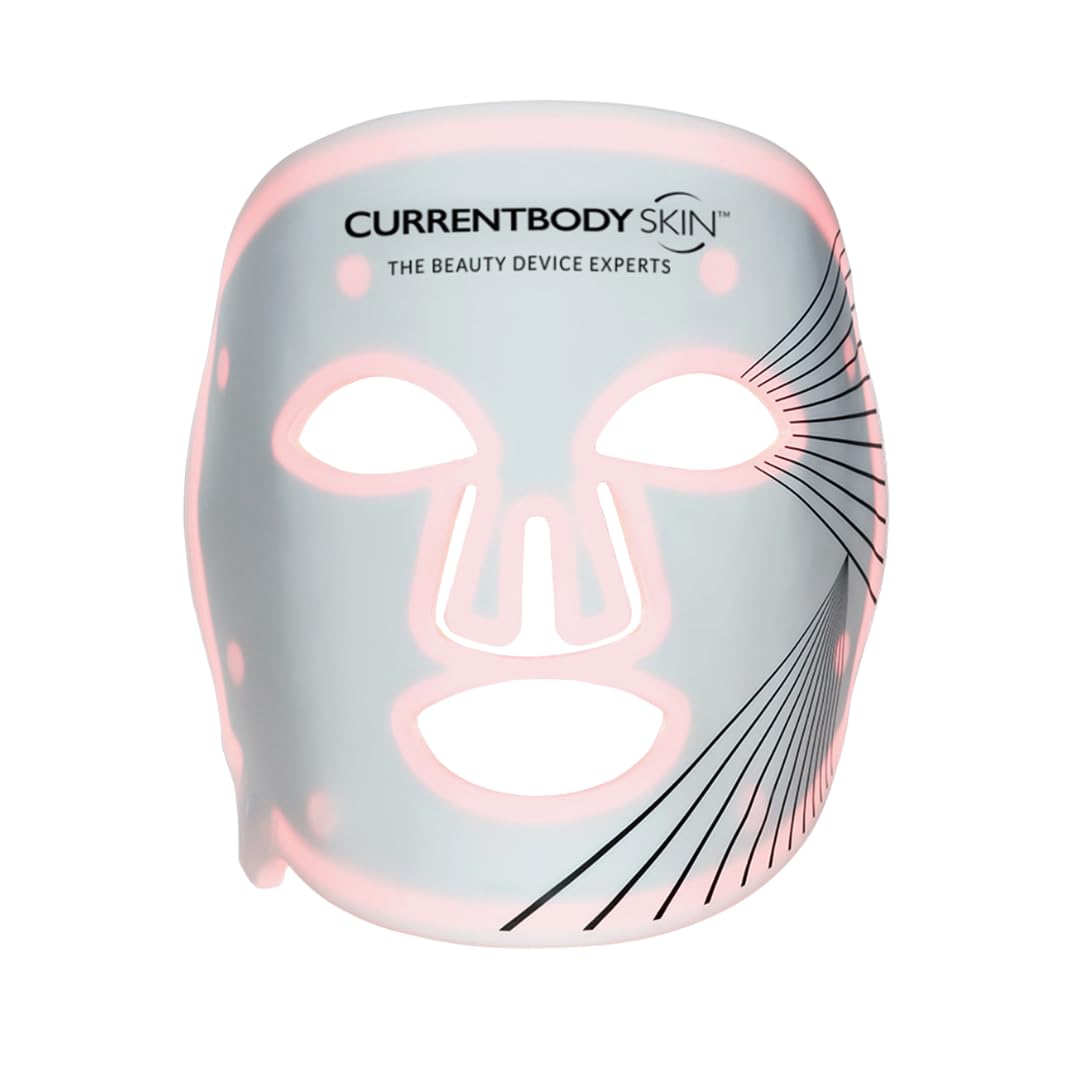
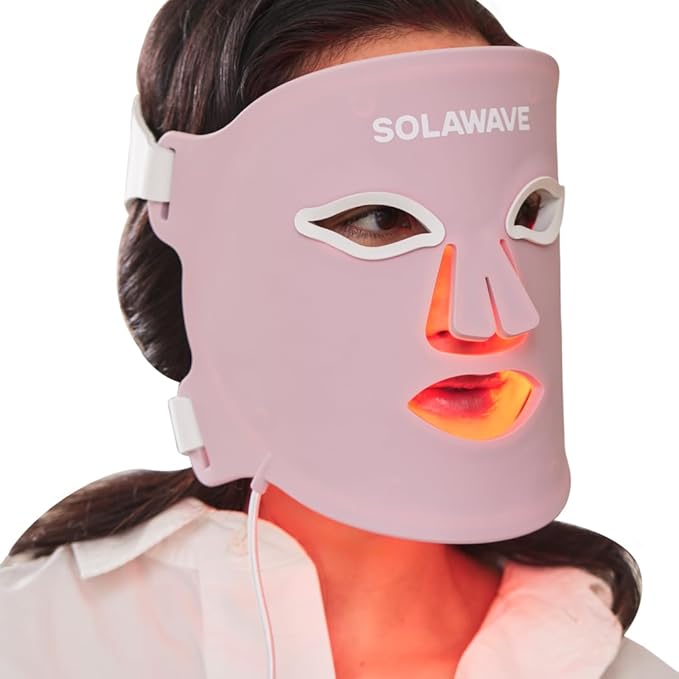
Solawave LED Light Therapy Face Mask — best ecosystem match
If you already own the Solawave wand, the brand's mask uses the same 630nm red, deep red, near-infrared, and amber wavelengths the wand is calibrated around. That alignment matters because layering wavelengths your skin is already responding to compounds the photobiomodulation effect rather than splitting it across competing protocols. Use the mask 3-4 nights weekly for 10 minutes and reserve the wand for your morning targeted nasolabial pass. Check the Solawave mask on Amazon.
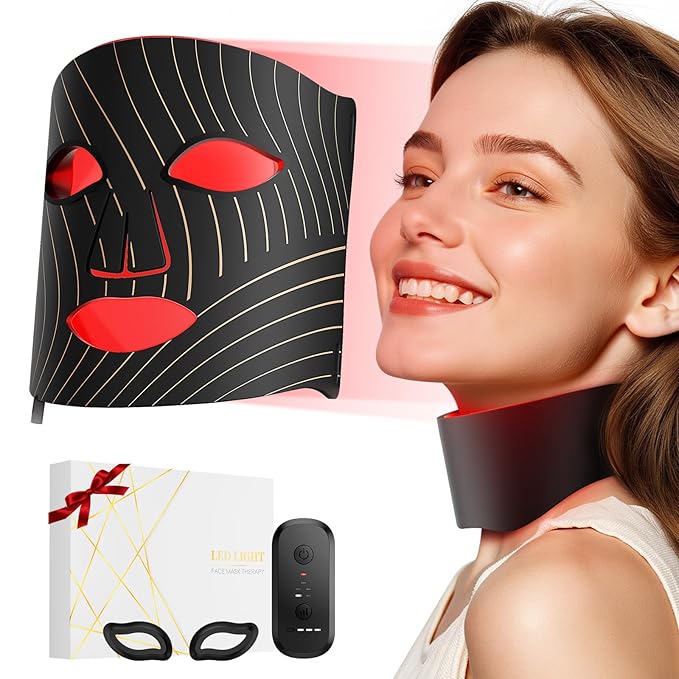
ONLUKY Red Light Therapy LED Face Mask with Neck — best for jowl and neck laxity
Nasolabial folds rarely show up alone. The same midface collagen loss that creates them usually drags downward into jowl softening and neck crepiness. ONLUKY's two-piece design covers the entire mandible and front of the neck, which means the same session that's softening your smile lines is also treating the structures pulling them down. Pair this with the wand on mornings only — 10 minutes mask, four minutes wand. View the ONLUKY mask with neck on Amazon.
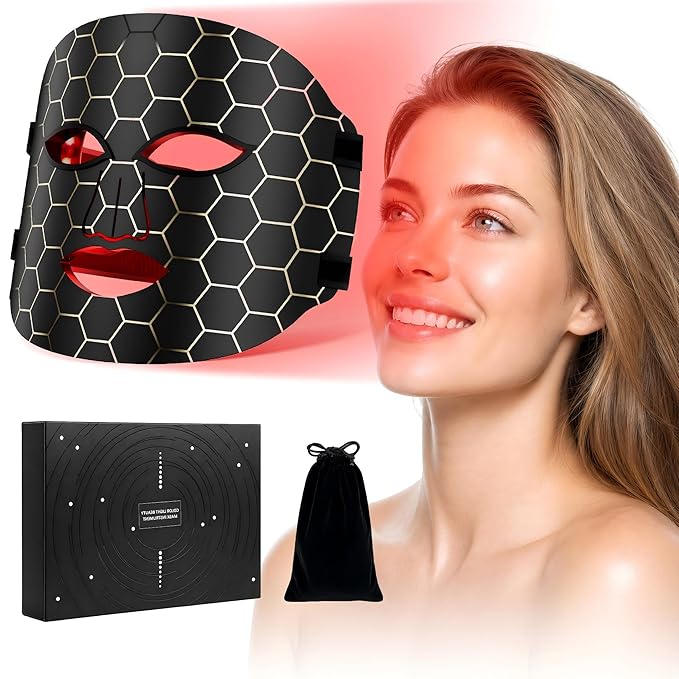
LED Face Mask 7-Mode Flexible Silicone — best contact for deep nasolabial folds
Rigid masks bridge over the deepest part of the nasolabial corridor, which means the LED diodes sit a few millimeters off the skin exactly where you need contact most. A flexible silicone mask drapes into the fold and presses the diodes flush against the crease. Seven wavelength modes also let you cycle through red for collagen, NIR for deeper tissue, and yellow for surface tone. See the flexible silicone LED mask on Amazon.
NEWKEY 4D 630nm Mask — best contoured fit for the smile-line zone
The 4D contoured shape was designed specifically so the diode panels wrap around the cheek apple and lower midface — the zone where your smile lines and nasolabial folds intersect. At a clean 630nm red wavelength, the dose is consistent across the panel rather than diluted across multiple LED colors. A solid mid-budget option to alternate with the Solawave wand on nights you don't want a multi-wavelength approach. Check the NEWKEY 4D mask on Amazon.
Verfubo FDA-Cleared Face & Neck Mask — best regulatory credential
FDA Class II clearance for a home LED device means the manufacturer has demonstrated wavelength output and dose to a federal standard. If you want to combine a Solawave wand routine with a mask that has cleared the regulatory bar, Verfubo is one of the few sub-$200 options with documentation. Includes neck coverage. View the Verfubo mask on Amazon.
Common mistakes when learning how to use Solawave wand on nasolabial folds and smile lines daily
Gliding downward. Microcurrent trains the muscle in the direction you move the wand. Downward strokes deepen the very fold you're treating. Always upward and outward.
Skipping conductive serum. The microcurrent has no path without a water-based conductor. Dry skin or thick cream means you're getting heat and light only — half the device's value.
Pressing too hard. The wand is designed for skin contact, not pressure. Hard pressing can bruise capillaries in the thin midface skin. Light, gliding contact only.
Quitting at week three. Visible nasolabial softening typically begins between weeks six and ten. People who stop at three weeks miss the actual results window.
Going inconsistent. Three days a week sustained beats seven days for two weeks then nothing. Pick a frequency you'll actually keep.
For a deeper read on consistency and sequencing, see our red light therapy routine guide.
Frequently Asked Questions
How long does it take to see results on nasolabial folds with the Solawave wand?
Most users see measurable softening of the nasolabial corridor between weeks six and ten of daily use. Microscopic collagen remodeling begins in the first two weeks but is not visible. Hydration-driven plumping can appear within 5-7 days but reverses if you stop. The structural softening that lasts requires the full 8-12 week window.
Can I use the Solawave wand twice a day on smile lines?
Yes, but it isn't necessary and can cause mild redness or warmth in thin midface skin. The fibroblast response peaks after a single daily session; a second daily pass adds minimal collagen benefit. If you do twice-daily sessions, keep them at least eight hours apart and watch for tightness or sensitivity.
Should I use the wand before or after my LED mask?
Mask first, wand second. The mask covers the whole face for 10 minutes at a broad dose, then the wand delivers a concentrated, targeted finish on the nasolabial fold with the added microcurrent the mask doesn't offer. Doing wand first means the targeted boost wears off before the mask session ends.
Does the Solawave wand work on deep, decade-old nasolabial folds?
It softens them but won't eliminate them. Deep static folds (visible at rest, not just when smiling) reflect both collagen loss and fat-pad descent. The wand addresses the collagen component but cannot reposition fat pads. Expect a 15-30% visual improvement, not erasure. Combine with a topical retinoid for compounded results, and consider in-office filler if the structural depth is significant.
Is microcurrent safe to use on the upper lip and nasolabial area?
Yes. The wand's subsensory current (typically 80-300 microamps) is well below the threshold for muscle contraction or nerve stimulation. Avoid use directly over active cold sores, broken skin, recent filler (wait two weeks post-injection), or if you have a pacemaker or are pregnant.
Can I use the Solawave wand with Botox or dermal filler?
Microcurrent over fresh filler can theoretically displace product, so wait two weeks after any nasolabial filler injection before resuming wand use. Botox in the upper face is unaffected. Many dermatologists actually recommend microcurrent maintenance between filler appointments because it can extend results by keeping the underlying musculature toned.
What serum works best for daily Solawave wand use on smile lines?
Look for a water-based serum with peptides (Matrixyl 3000, Argireline) or hyaluronic acid as the primary base. Avoid silicones (dimethicone, cyclopentasiloxane) and oils, which block conductivity. The Solawave Renew Complex Serum is formulated for conductivity, but plenty of third-party hyaluronic and peptide serums work identically. For more pairings, browse our best LED masks for fine lines 2026 roundup.
Key Takeaways
- Choosing the right how to use Solawave wand on nasolabial folds and smile lines daily means matching capacity and output ports to your actual devices
- Always check actual watt-hours (Wh), not just watts — runtime depends on Wh, not peak output
- Also covers: Solawave nasolabial fold technique
- Also covers: Solawave smile line routine
- Also covers: Solawave wand mouth lines tutorial
- Compare price-per-Wh across models to find the best value for your budget